Want to Invest in the Hang Seng Index? Full Comparison of the 3 Hottest ETFs: 2800 vs 2833 vs 3115 – Which One Is Worth Buying?





Image Source: pexels
When you follow the Hang Seng Index and decide to put money to work, choosing the right ETF is critical. For most investors who focus on “long-term holding” and “cost control,” the answer is clear: 3115 iShares Core Hang Seng Index ETF is the top choice.
Core reason: It has the lowest total expense ratio (TER) among the three, meaning your long-term investment costs are effectively minimized.
However, the lowest cost isn’t ideal for everyone. Your trading frequency and capital size will also influence the final decision.
Key Takeaways
- Choosing a Hang Seng Index ETF should be based on your investment goals and personal needs.
- 3115 has the lowest fees – perfect for long-term investors and small-capital accounts.
- 2800 offers the highest liquidity – ideal for frequent traders and large-capital investors.
- 2833 provides a balanced option suitable for medium- to long-term investors.
- Hong Kong-listed ETFs are exempt from stamp duty, and both capital gains and dividends are tax-free.
Before Investing in HSI ETFs: Understand the Market Background First
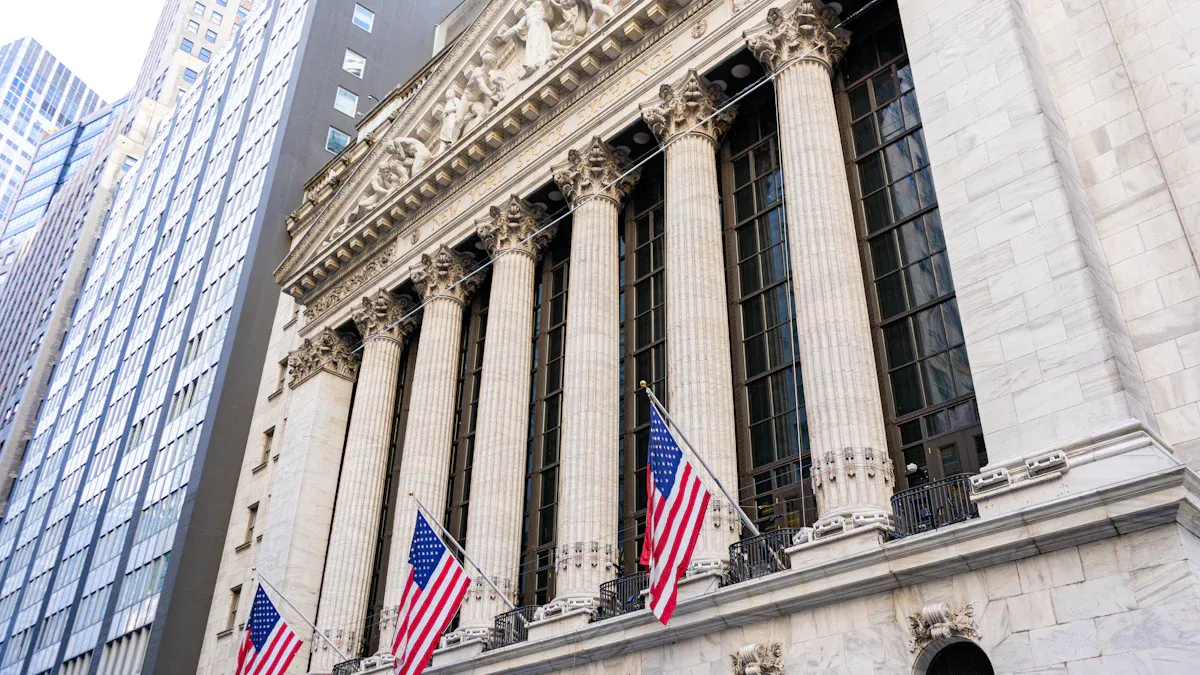
Image Source: unsplash
Establishing the right market mindset before committing capital is extremely important. This helps you understand why ETFs that track the Hang Seng Index are the preferred choice for many investors.
Why Focus on the Hang Seng Index and ETF Investing?
The Hang Seng Index represents the overall performance of the Hong Kong stock market and serves as a thermometer for market sentiment. When you believe the Hang Seng Index is at a low point or has upside potential, “buying the entire market” becomes a highly efficient strategy. ETFs (Exchange-Traded Funds) are the perfect tool to achieve this goal.
ETFs make investing much simpler, offering these main advantages:
- Time & effort saving: No need to dig into individual company reports—just focus on the big-picture direction of the index.
- Flexible trading: ETFs trade like stocks on the exchange, allowing you to enter or exit anytime.
- Cost advantage: Buying and selling Hong Kong ETFs is exempt from stamp duty, saving you transaction fees.
- High transparency: Fund companies publish holdings daily, so you always know exactly where your money is invested.
In short, ETFs give you the convenience of trading a single stock while achieving diversification across a basket of blue-chip companies.
Meet the Main Characters: Who Are 2800, 2833, and 3115?
All three ETFs aim to track the Hang Seng Index, but their backgrounds and characteristics differ—like athletes with different strengths.
- 2800 Tracker Fund (TraHK): Hong Kong’s first ETF, with the longest history and largest assets. Its biggest feature is extremely high trading volume and unmatched liquidity—beloved by institutions and short-term traders.
- 2833 Hang Seng Index ETF: Issued by Hang Seng Investment Management Limited, the official compiler of the Hang Seng Index—essentially the “official” index ETF. Its performance is solid and balanced across the board.
- 3115 iShares Core Hang Seng Index ETF: Issued by BlackRock, the world’s largest asset manager, with a focus on “low cost.” It has the lowest TER among the three, making it especially suitable for long-term investors who want to minimize fees.
Once you understand their basic backgrounds, you can more easily decide which one best fits your Hang Seng Index investment plan based on their data.
The Three Major Hang Seng Index ETFs: Head-to-Head Comparison
Image Source: pexels
Data is objective and helps you cut through market noise to make rational decisions. We will analyze the pros and cons of these three ETFs across five core metrics.
Quick Overview: Key Data of the Three HSI ETFs
Metric 2800 Tracker Fund 3115 iShares Core 2833 Hang Seng Index ETF Total Expense Ratio (TER) ~0.08% ~0.07% (lowest) ~0.10% Cost per Board Lot ~HK$8,500 (highest) ~HK$850 (lowest) ~HK$8,500 Avg. Daily Volume Extremely high (best liquidity) Lower Medium Tracking Error Very low Very low Very low Dividend Frequency Semi-annual Semi-annual Semi-annual Note: The above figures are approximate. Actual fees and prices fluctuate with the market. Please refer to the latest exchange announcements before trading.
From the table, you can quickly see that each has clear strengths and weaknesses. Next, we dive deeper into the details of each option.
2800 Tracker Fund: The King of Liquidity
If your top priority is “being able to buy and sell quickly anytime,” then 2800 is undoubtedly your first choice.
- Absolute advantage: Liquidity As Hong Kong’s veteran ETF, 2800’s average daily turnover far exceeds the other two—often by dozens of times. This means there are always plenty of buyers and sellers, allowing you to execute large trades quickly at prices very close to the market price with minimal bid-ask spread.
- Cost & entry barrier Its TER is low but sits in the middle among the three. According to the fund’s ongoing charges figure, it is calculated based on annual management fees, trustee fees, and other expenses as a percentage of average net asset value and may change yearly. Additionally, its higher cost per board lot can be a slight burden for retail investors with limited capital.
Who should choose 2800?
If you are a short-term trader who frequently enters and exits the market, or an institutional investor with large capital who values liquidity above all, 2800’s advantages are irreplaceable.
3115 iShares Core: Lowest Cost Champion
If you are a long-term investor looking 10 or 20 years ahead, every cent of cost matters.
- Absolute advantage: Cost 3115’s biggest selling point is its ultra-low TER—the lowest among the three. This seemingly tiny difference, amplified by compounding over decades, creates a significant impact on your final returns.
The key to winning in long-term investing
Assuming a 10-year horizon, a mere 0.03% annual fee difference means your portfolio will grow noticeably more thanks to lower costs. Money saved is money earned—this is an iron rule in long-term investing.
- Investor-friendly entry threshold Another major advantage of 3115 is its extremely low cost per board lot—only a few hundred HKD—making it perfect for retail investors with limited funds or beginners starting dollar-cost averaging.
- Point to note Its drawback is relatively lower liquidity and much lower daily volume than 2800. However, for long-term investors who rarely trade, this impact is negligible.
2833 Hang Seng Index ETF: The Balanced Player
If you want a middle ground between “trading convenience” and “holding cost,” 2833 is worth considering.
- Middle-of-the-road approach 2833’s metrics fall right in the middle. Its TER is higher than 3115 but lower than (or similar to) 2800; its liquidity is better than 3115 but far below 2800. Think of it as a “compromise” option.
- Official pedigree Issued by the very company that compiles the Hang Seng Index, it carries an “official” aura that attracts a loyal investor base. For those who care about the issuer’s reputation, this can be a plus.
Who should consider 2833?
If you plan to hold for the medium-to-long term but still want some trading flexibility without paying 2800’s relatively higher fees, 2833 offers a solid balanced solution. It gives you one more moderate choice when planning your Hang Seng Index strategy.
Investment Goal Decision-Making: How to Choose Your ETF?
After understanding the data differences, the key is to match these metrics with your own investment objectives. Your view on the Hang Seng Index trend and your investing habits will directly determine the best ETF for you. Below are clear recommendations for three common scenarios.
Important note: Although these ETFs are traded on the Hong Kong Stock Exchange (HKEX) in HKD, all currency values in this article are approximated in USD for consistency. Actual amounts will vary with exchange rates.
If you’re comparing board-lot cost, TER, and liquidity, it helps to translate the “USD for reference” back into the “HKD you actually trade.” A quick way is to use the BiyaPay fiat FX converter to check live rates, so you don’t over- or under-estimate entry cost with outdated assumptions. It also makes it easier to align different funding quotes on the same baseline.
ETF names can look similar and tickers are short, so the most common mistake happens right before placing an order. Before you trade, you can verify ticker, exchange, and basic instrument details via the BiyaPay stock info search, especially when you’re switching between 2800, 2833, and 3115.
If you prefer a smoother flow from “check” to “execute,” you can open the trading entry to reach the same-domain investing page. To keep a consistent set of tools bookmarked, start from the official site or Sign up.
Decision Point 1: Long-Term Investing, Cost First
If you are investing for the next decade or two with the goal of building wealth through long-term holding, “cost” is your most important decision factor.
Clear choice: 3115 iShares Core Hang Seng Index ETF
- Core reason: Unmatched cost advantage 3115 has the lowest TER among the three. That tiny percentage difference, compounded over decades, translates into substantial extra wealth. Every cent saved in fees becomes part of your future returns—controlling cost is the most direct way to boost long-term performance.
- Low liquidity? No problem Although 3115 has lower daily volume, this barely affects investors who plan to buy and hold rather than trade daily. You don’t need to pay a premium for ultra-high liquidity.
Action suggestion: If you plan to invest a fixed amount monthly or quarterly and hold long-term, choosing 3115 will maximize your potential returns.
Decision Point 2: Frequent Trading, Liquidity First
If your strategy involves short-term trades based on market swings or you manage large capital as an institution, “liquidity” overrides everything else.
Clear choice: 2800 Tracker Fund
- Core reason: King-level liquidity 2800’s daily turnover dwarfs the others, meaning there are always enough buyers and sellers. You can execute large trades instantly at prices very close to market value with minimal slippage—crucial for traders who need to capture short-term moves.
- Cost consideration Although its TER and board-lot cost (~$1,085 USD) are relatively higher, for active traders, the ability to get filled quickly far outweighs these small ongoing cost differences.
Action suggestion: If you trade frequently or move large sums, choose 2800 to ensure smooth execution. You can use platforms like Biyapay to quickly convert and transfer funds, giving you maximum flexibility to seize trading opportunities.
Decision Point 3: Small-Capital Beginner, Entry Barrier First
If you’re just starting out or can only invest a small amount each month, “entry threshold” is what you care about most.
Clear choice: 3115 iShares Core Hang Seng Index ETF
- Core reason: Extremely low entry cost 3115 has the lowest board-lot price among the three—around $108 USD. You don’t need to save up a large sum to get started. You can buy a full board lot with minimal capital and begin your index investing journey—perfect for building a regular investment habit.
- Double benefit Choosing 3115 not only gives you the lowest entry barrier but also the lowest ongoing holding cost—truly a win-win.
Action suggestion: For retail investors or beginners, 3115 is the friendliest option. Platforms like Biyapay make it easy to transfer small amounts and start buying with almost no pressure.
In summary, there is no absolute “best” ETF—only the one that best matches your current strategy. Choose wisely based on your capital size, trading frequency, and investment horizon.
Now you can make a clear decision based on your goals. Here is our final recommendation:
- Long-term investing, cost first: Choose 3115 iShares Core for the lowest holding cost.
- Frequent trading, liquidity first: Choose 2800 Tracker Fund for smooth large-order execution.
- Looking for balance: Consider 2833 Hang Seng Index ETF—a solid middle ground between cost and liquidity.
Remember, there is no universally best ETF—only the one that best fits your personal strategy. Make the smartest choice based on your needs.
FAQ
How are dividends handled for these three ETFs?
All three ETFs distribute dividends regularly, usually semi-annually. The dividends you receive come from the underlying Hang Seng Index constituent companies. You can choose to reinvest dividends to accelerate wealth growth.
What is tracking error? Will it affect my returns?
Tracking error is the difference between an ETF’s return and its benchmark index (Hang Seng Index). All three ETFs have extremely low tracking error, meaning they replicate the index performance very accurately. Therefore, this factor has minimal impact on your long-term returns.
Why not just buy all the constituent stocks directly?
Directly buying all constituent stocks requires huge capital and complicated transactions. ETFs let you own a diversified basket at a fraction of the cost—making it a far more efficient choice for most investors.
Do I need to pay taxes when investing in these Hong Kong ETFs?
Under current Hong Kong tax law, trading HKEX-listed ETFs is exempt from stamp duty, and both capital gains and dividend income are tax-free. This keeps the overall tax burden very low for ETF investors.
*This article is provided for general information purposes and does not constitute legal, tax or other professional advice from BiyaPay or its subsidiaries and its affiliates, and it is not intended as a substitute for obtaining advice from a financial advisor or any other professional.
We make no representations, warranties or warranties, express or implied, as to the accuracy, completeness or timeliness of the contents of this publication.
Related Blogs of

Never Trust Any 'Acquaintance Currency Exchange': Real Cases of Crypto Assets Stolen via Acquaintance Scams During the World Cup


Reasons for Cross-Border Payment Account Closure (Account Shutdown) and How to Respond: Essential Anti-Account-Ban Guide for Foreign Trade Professionals


Logic of Money Laundering Conviction: How Ordinary People Ensure Their Crypto Asset Cash-Out Activities Never Cross the Red Line


Cross-Border Charity and International Rescue: How Digital Assets Enable Point-to-Point Ultra-Fast Fund Delivery in Major Global Events?
Choose Country or Region to Read Local Blog
 Australia
 Austria
 Belgium
 Canada
 Cyprus
 Czech Republic
 Denmark
 Estonia
 Finland
 France
 Germany
 Greece
 Hong Kong
 India
India Indonesia
 Ireland
 Italy
Italy Japan
Japan Latvia
 Lithuania
 Luxembourg
 Malaysia
 Malta
Malta Morocco
 Nepal
Nepal Netherlands
 New Zealand
 Norway
 Pakistan
 Philippines
 Poland
 Portugal
 Romania
 Singapore
 Slovakia
 Slovenia
 South Africa
 South Korea
 Spain
Spain Sweden
 Thailand
 The United States
 Turkey
 United Arab Emirates
 United Kingdom
 Vietnam
Contact Us




BIYA GLOBAL LLC is registered with the Financial Crimes Enforcement Network (FinCEN), an agency under the U.S. Department of the Treasury, as a Money Services Business (MSB), with registration number 31000218637349, and regulated by the Financial Crimes Enforcement Network (FinCEN).
BIYA GLOBAL LIMITED is a registered Financial Service Provider (FSP) in New Zealand, with registration number FSP1007221, and is also a registered member of the Financial Services Complaints Limited (FSCL), an independent dispute resolution scheme in New Zealand.