Why HSBC Holdings London Stock Price Volatility is a Focus for Investors




Image Source: pexels
The London HSBC stock price reflects multiple international and local factors, making it a focal point for investors’ close attention. Economic growth in major markets (UK, Hong Kong, China), interest rate changes, geopolitical risks, and regulatory policies directly impact stock price volatility.
| Influencing Factor | Specific Impact Description |
|---|---|
| Global Economic Conditions | The pace of economic growth in major markets affects profitability and stock price |
| Interest Rate Changes | Affect Hong Kong banks’ net interest income and economic growth |
| Geopolitical Risks | Increase market uncertainty, impacting investor confidence |
| Regulatory Policies | Affect the scope of banking operations, capital requirements, and operating costs |
Investors who understand these factors can make more rational capital allocation and risk assessments.
Key Points
- HSBC Holdings’ London stock price is influenced by internal factors such as profitability, management decisions, and technology investments, which directly affect investor confidence and stock price performance.
- External factors such as global economic conditions, interest rate changes, geopolitical risks, and regulatory policies can exacerbate stock price volatility, requiring investors to closely monitor these changes.
- The Hong Kong market has a significant impact on HSBC Holdings, with Hong Kong’s economic and policy changes quickly reflected in the London stock price, affecting overall investment returns.
- Combining technical analysis and fundamental analysis helps investors gain a more comprehensive understanding of stock price trends and formulate robust long- and short-term investment strategies.
- Effective risk management and flexible portfolio adjustments can help investors navigate market volatility, improving the accuracy and safety of investment decisions.
Main Drivers of London HSBC Stock Price

Image Source: pexels
Internal Factors
HSBC Holdings’ internal factors directly impact the London HSBC stock price. Profitability is the core indicator. When HSBC Holdings can steadily increase profits, investor confidence strengthens, and the stock price typically rises. Management decisions are also critical. When management drives business restructuring, capital allocation, or new market expansion, the market closely monitors their effectiveness. Financial performance reflects the company’s overall operational condition. If quarterly or annual results exceed market expectations, the London HSBC stock price often sees a positive response.
The dividend policy also influences investor sentiment. HSBC Holdings is known for stable dividends, attracting long-term investors. If the company adjusts its dividend policy, the market will reassess its attractiveness. In terms of technology spending, HSBC Holdings actively invests in financial technology to enhance digital service capabilities. These investments help improve operational efficiency but may increase cost pressures in the short term. Inflationary pressures are also significant. When operating costs rise due to inflation, profitability may be squeezed, impacting the London HSBC stock price.
Experts suggest that investors closely monitor HSBC Holdings’ financial reports, management announcements, and technological developments, as this information helps predict stock price trends.
| Internal Factor | Impact Description |
|---|---|
| Profitability | Directly affects investor confidence and stock price performance |
| Management Decisions | Determine the company’s development direction and capital utilization |
| Financial Performance | Reflects operational conditions, influencing market expectations |
| Dividend Policy | Stable dividends attract long-term capital; policy changes affect valuation |
| Technology Spending | Improves efficiency but increases short-term costs |
| Inflationary Pressures | Increase operating costs, compressing profit margins |
External Factors
External factors also drive the volatility of the London HSBC stock price. Changes in global economic conditions, particularly economic growth in the UK, China, and Hong Kong, directly affect HSBC Holdings’ business performance. Interest rate changes are another key factor. When interest rates rise in major markets, Hong Kong banks’ net interest income typically increases, boosting profitability. Geopolitical risks increase market uncertainty. Events such as U.S.-China relations or Brexit may make investors more cautious.
Regulatory policy changes have a profound impact on the banking industry. Capital requirements, compliance costs, and adjustments to business scope all affect HSBC Holdings’ operational strategies. The U.S. dollar’s performance is also noteworthy. Fluctuations in the USD exchange rate against other currencies affect HSBC Holdings’ international business revenue and asset value. The development of the cryptocurrency market poses competitive pressure on traditional banks. Macroeconomic uncertainties, such as rising inflation or economic recession, can lead to significant fluctuations in the London HSBC stock price.
- Global Economic Conditions: Affect business growth in major markets
- Interest Rate Changes: Alter the bank’s profitability structure
- Geopolitical Risks: Increase market uncertainty
- Regulatory Policies: Impact operating costs and business scope
- U.S. Dollar Performance: Affects international revenue and asset value
- Cryptocurrency Development: Introduces new competition
- Macroeconomic Uncertainty: Exacerbates stock price volatility
| External Factor | Impact Scope |
|---|---|
| Global Economic Conditions | Affects business growth and profitability |
| Interest Rate Changes | Alters net interest income |
| Geopolitical Risks | Impacts investor confidence and capital flows |
| Regulatory Policies | Increases compliance costs, restricts business development |
| U.S. Dollar Performance | Affects international business and asset value |
| Cryptocurrency Development | Increases market competition pressure |
| Macroeconomic Uncertainty | Exacerbates market volatility |
Investors should comprehensively analyze internal and external factors to more accurately assess the future trend of the London HSBC stock price.
Impact of Hong Kong Factors
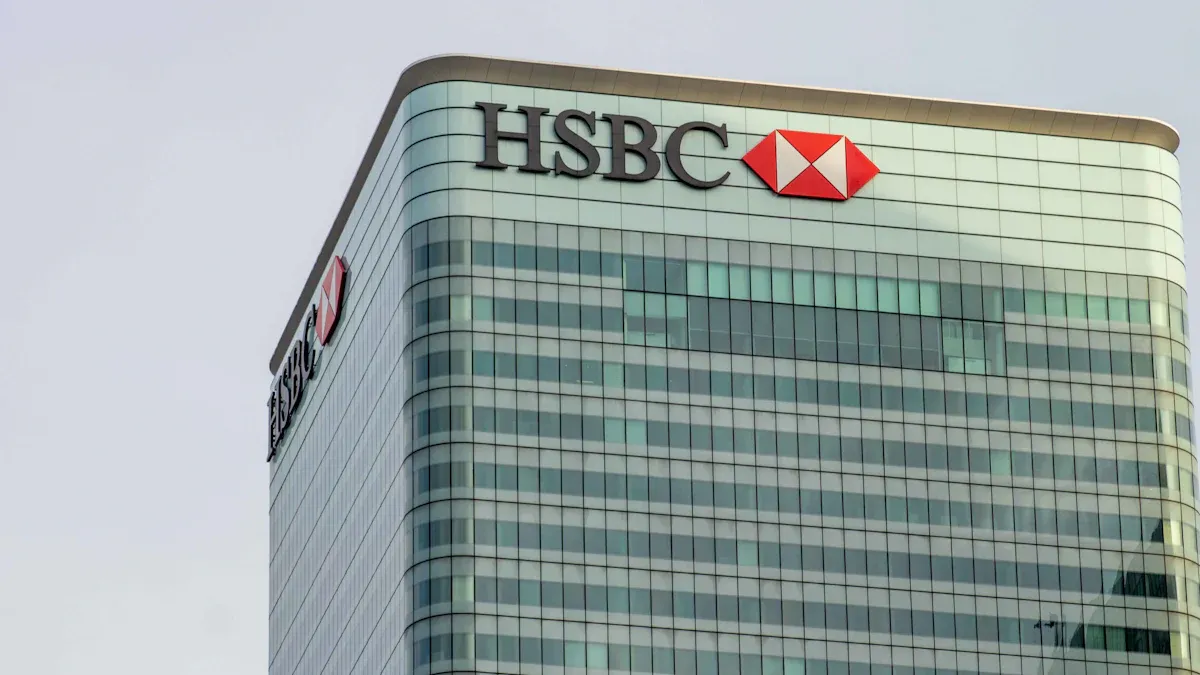
Image Source: pexels
Hong Kong Market Position
HSBC Holdings holds a unique position in Hong Kong’s financial market. As an international financial hub, Hong Kong attracts significant global capital inflows. HSBC Holdings is a leading player in Hong Kong’s banking industry, with a substantial market capitalization and significant influence on the Hang Seng Index. Many Hong Kong residents and businesses choose HSBC as their primary bank, dominating credit, deposit, and investment services. HSBC Holdings is also listed in Hong Kong, forming a dual-listing structure with the London market. This structure closely links the London HSBC stock price with Hong Kong market performance.
Experts note that when HSBC Holdings performs well in Hong Kong’s market and maintains a strong reputation, the London HSBC stock price typically benefits. Conversely, if the Hong Kong market experiences volatility, the London market will immediately reflect related risks.
Transmission Effect
Hong Kong’s economic environment, policy changes, and geopolitical factors directly affect HSBC Holdings’ business performance. When Hong Kong’s economic growth slows, corporate financing and consumer demand decline, putting pressure on HSBC Holdings’ profitability. On the policy front, new regulatory measures or financial policies introduced by the Hong Kong government alter banking operating costs and compliance requirements. Geopolitical risks, such as U.S.-China tensions, increase liquidity risks and affect investor confidence.
These changes quickly transmit to the London HSBC stock price through capital markets. For example, if Hong Kong experiences significant policy adjustments or unfavorable economic data, investors in the London market will promptly adjust their holdings, leading to stock price volatility. The table below summarizes how Hong Kong factors affect the London HSBC stock price:
| Hong Kong Factor | Impact Scope | Impact on London HSBC Stock Price |
|---|---|---|
| Economic Growth | Corporate profitability, credit demand | Changes in profit expectations, stock price volatility |
| Policy Changes | Compliance costs, operational strategies | Shifts in investor confidence, price adjustments |
| Geopolitical Risks | Capital flows, risk assessment | Market risk aversion, stock price pressure |
Investors should closely monitor Hong Kong’s economic and policy developments, as these factors quickly reflect in the London HSBC stock price, affecting overall investment returns.
Stock Price Analysis Methods
Technical Analysis
Technical analysis is a commonly used tool for stock price forecasting. Analysts use charts and data to observe stock price trends and trading volume changes. The MACD indicator is one of the most widely used technical indicators, particularly suitable for short- and medium-term investors. Studies show that combining the MACD indicator with market profile theory can improve investment performance, helping investors more effectively grasp stock price trends. Trend lines, such as moving averages, assist analysts in determining long- and short-term price trends. The RSI indicator is used to measure whether the stock price is in an overbought or oversold state, helping identify potential reversal points.
Trading volume indicators are equally important. When the stock price is at a high, trading volume, technical indicators, and news-based indicators become key analysis points. When the stock price is at a low, macroeconomic analysis, technical indicators, and trading volume indicators are more critical. These methods help investors integrate multiple signals, improving judgment accuracy.
Technical analysis cannot guarantee 100% accurate predictions but can provide auxiliary judgments for market trends.
| Common Technical Indicator | Main Use |
|---|---|
| MACD | Determines trend and momentum |
| Moving Average | Analyzes long- and short-term trends |
| RSI | Measures overbought or oversold conditions |
| Trading Volume | Observes market activity levels |
Fundamental Analysis
Fundamental analysis focuses on a company’s intrinsic value. Analysts evaluate HSBC Holdings’ financial statements, profitability, balance sheet, and cash flow. This method emphasizes long-term investment value, suitable for investors seeking stable growth. Analysts focus on HSBC Holdings’ revenue sources, cost structure, and capital utilization efficiency. When the company’s profits grow steadily and asset quality is strong, the stock price typically has solid support.
Additionally, fundamental analysis considers the macroeconomic environment, including interest rates, inflation, regulatory policies, and geopolitical factors. These external conditions affect the company’s future profit expectations and risk levels. Investors can compare the financial metrics of different banks to assess HSBC Holdings’ competitive advantage in Hong Kong’s banking industry.
Fundamental analysis helps investors build long-term investment strategies, reducing the impact of short-term market volatility.
Risks and Strategies
Main Risks
Investors must recognize several potential risks when evaluating the London HSBC stock price. In terms of market volatility, the Chicago Board Options Exchange Volatility Index (VIX) has recently been declining, indicating lower short-term volatility expectations, but long-term vigilance is needed for sudden events causing sharp changes. Inflationary pressures are also noteworthy. In April, the U.S. CPI rose 2.3% year-over-year, the smallest increase in recent years, suggesting temporary relief in inflation pressure, but future uncertainty remains. Regarding geopolitical risks, the U.S.-China tariff truce has temporarily reduced recession risks, but trade tensions may resurface. Regulatory changes, such as Europe’s MiFID II and U.S. SEC rules, increase market transparency while raising compliance costs. Technological risks include cybersecurity threats, with frequent data breaches and fraud incidents, requiring banks to continuously invest in encryption and threat detection technologies.
- Market Volatility: The VIX reflects changes in investor sentiment
- Inflationary Pressures: CPI and PPI data show price change trends
- Geopolitical Risks: U.S.-China trade policies and international situations affect capital flows
- Regulatory Changes: New regulations increase compliance requirements
- Technological Risks: Cybersecurity and data security challenges
Risk Management
Effective risk management strategies help reduce losses. Banks can use project management system risk databases and historical data to systematically identify potential risks. Probability-impact matrices help quantify risks, allowing decision-makers to focus on high-priority issues. For different risks, banks can adopt avoidance, mitigation, transfer, or acceptance strategies and establish automated contingency plans. Continuous monitoring of progress and resources, using big data analytics to detect anomalies, enables timely alerts. For information security, establishing multi-layered defense architectures and conducting regular drills and vulnerability monitoring effectively prevents major cybersecurity incidents. At the organizational level, clear divisions among the board, risk management committee, and independent audit department, as outlined in the three lines of defense model, ensure comprehensive risk management implementation.
Experts recommend that banks continue investing in regulatory technology and cybersecurity while strengthening cross-departmental collaboration to enhance overall risk response capabilities.
Investment Recommendations
Investors should closely monitor market data analysis, leveraging machine learning and big data tools to grasp short-term market trends. Compliance technologies, such as regulatory reporting systems and anti-money laundering tools, help reduce penalty risks. Economic uncertainty data, including recessions, interest rate fluctuations, and geopolitical events, should be factored into investment decisions. Investors are advised to diversify portfolios, set stop-loss points, and regularly review asset allocations. Facing London HSBC stock price volatility, investors should maintain information sensitivity, flexibly adjust strategies, and reduce risks from single markets or assets.
Investors can leverage increased market transparency and emerging regulatory reforms, using technology tools to improve decision-making efficiency and stay competitive in volatile markets.
Investors should continuously monitor changes in the London HSBC stock price. Internal factors like profitability and technology spending, and external factors like global economy and regulatory policies, all influence stock price trends. The unique position of the Hong Kong market should not be overlooked. Experts suggest that investors use technical and fundamental analysis, combined with risk management strategies, to improve decision quality. Maintaining information sensitivity helps navigate market volatility.
FAQ
How are HSBC Holdings’ London stock price and Hong Kong stock price related?
HSBC Holdings is listed in both Hong Kong and London. Economic and policy changes in Hong Kong directly affect the London stock price, and the two markets often move in sync.
How should investors track HSBC Holdings’ latest updates?
Investors can access HSBC Holdings’ latest information through its official website, financial news platforms, and Hong Kong Stock Exchange announcements to stay updated on market dynamics.
How does HSBC Holdings’ dividend policy affect investors?
HSBC Holdings is known for stable dividends. Stable dividends attract long-term capital, and policy changes prompt investors to reassess its attractiveness.
What are the main external risks facing HSBC Holdings?
HSBC Holdings faces external risks such as global economic fluctuations, interest rate changes, regulatory policies, and geopolitical risks, which affect its profitability and stock price.
How do HSBC Holdings’ technology investments affect its performance?
HSBC Holdings actively invests in financial technology. Technology upgrades improve service efficiency but may increase short-term costs, enhancing long-term competitiveness.
HSBC Holdings’ stock price fluctuations, driven by macroeconomic factors, geopolitical risks, and corporate strategies, offer opportunities for investors, but how can you navigate volatile markets with cost-effective global investments? BiyaPay provides an all-in-one financial platform, enabling trading of US and Hong Kong stocks without offshore accounts, complementing HSBC’s share buybacks and wealth management strengths.
Supporting USD, HKD, and 30+ fiat and digital currencies, real-time exchange rate tracking ensures transparency, while global remittances to 190+ countries feature transfer fees as low as 0.5% with swift delivery, ideal for international investment needs. A 5.48% annualized yield savings product, with no lock-in period, balances risk and returns. Sign up for BiyaPay today to integrate HSBC’s robust financial services with BiyaPay’s global investment solutions for an efficient, low-risk wealth-building strategy!
*This article is provided for general information purposes and does not constitute legal, tax or other professional advice from BiyaPay or its subsidiaries and its affiliates, and it is not intended as a substitute for obtaining advice from a financial advisor or any other professional.
We make no representations, warranties or warranties, express or implied, as to the accuracy, completeness or timeliness of the contents of this publication.
Related Blogs of
Micro Dow, Micro Nasdaq, Micro S&P Futures Comprehensive Comparison – Helping You Find the Best Trading Choice


US Stock Market Holiday Countdown: How Investors Should Position for Next Week's Trading


Focusing on AI and Semiconductors: In-Depth Analysis of 10 Leading Future US Tech Stocks


How to Choose US Major Indices: Pros and Cons Analysis of S&P 500, Dow Jones, and Nasdaq

Choose Country or Region to Read Local Blog
 Australia
 Austria
 Belgium
 Canada
 Cyprus
 Czech Republic
 Denmark
 Estonia
 Finland
 France
 Germany
 Greece
 Hong Kong
 India
India Indonesia
 Ireland
 Italy
Italy Japan
Japan Latvia
 Lithuania
 Luxembourg
 Malaysia
 Malta
Malta Morocco
 Nepal
Nepal Netherlands
 New Zealand
 Norway
 Pakistan
 Philippines
 Poland
 Portugal
 Romania
 Singapore
 Slovakia
 Slovenia
 South Africa
 South Korea
 Spain
Spain Sweden
 Thailand
 The United States
 Turkey
 United Arab Emirates
 United Kingdom
 Vietnam
Contact Us




BIYA GLOBAL LLC is a licensed entity registered with the U.S. Securities and Exchange Commission (SEC No.: 802-127417); a certified member of the Financial Industry Regulatory Authority (FINRA) (Central Registration Depository CRD No.: 325027); regulated by the Financial Industry Regulatory Authority (FINRA) and the U.S. Securities and Exchange Commission (SEC).
BIYA GLOBAL LLC is registered with the Financial Crimes Enforcement Network (FinCEN), an agency under the U.S. Department of the Treasury, as a Money Services Business (MSB), with registration number 31000218637349, and regulated by the Financial Crimes Enforcement Network (FinCEN).
BIYA GLOBAL LIMITED is a registered Financial Service Provider (FSP) in New Zealand, with registration number FSP1007221, and is also a registered member of the Financial Services Complaints Limited (FSCL), an independent dispute resolution scheme in New Zealand.