How Listed Company Stock Price Enquiry Helps You Stay on Top of Market Trends



Image Source: pexels
If you want to stay on top of market trends, checking stock prices is an important method. Stock prices instantly reflect market sentiment, showing investors’ reactions to company news and the economic environment. You can observe market changes by checking stock prices. In addition to prices, combining data such as announcements and financial reports can enhance your investment judgment.
Key Points
- Checking stock prices can instantly reflect market sentiment, helping you understand investors’ buying and selling behaviors and market trends.
- Combining company announcements and financial report information can improve your judgment of the reasons behind stock price fluctuations.
- Paying attention to economic indicators helps you grasp changes in the broader environment, improving the accuracy of investment decisions.
- Using multiple enquiry channels and AI tools can enhance enquiry efficiency and analytical capabilities, reducing information bias.
- Regularly tracking stock prices and holding records, combined with technical indicators and diverse information, allows you to more comprehensively understand market trends and avoid blindly following the crowd.
Importance
Market Sentiment
When you check stock prices, you can observe changes in market sentiment. Market sentiment affects investors’ buying and selling behaviors, which in turn drive stock price fluctuations. You can refer to the following common sentiment indicators:
- Sentiment Indicators: For example, the buy-sell ratio; when buy orders exceed sell orders, it indicates market optimism, and vice versa for pessimism.
- VIX Index (Fear Index): The higher the index value, the greater the market risk and volatility, indicating more investor concern about future trends.
- Commitment of Traders (COT) Report: This weekly report shows the positions of different types of investors, helping you judge market trends.
By effectively using these statistics, you can quickly grasp changes in market participants’ sentiments, thereby understanding the reasons for stock price fluctuations.
Company News
Company News directly impacts stock prices. You can obtain important information from announcements, news, or financial reports. The following table summarizes how company news affects stock prices:
| Evidence Item | Content Summary |
|---|---|
| Market Reaction | When a company announces a share buyback, the market usually responds with a positive stock price reaction, indicating investors believe the stock is undervalued. |
| Insider Trading Behavior | Insiders increase buying or reduce selling before a buyback announcement, then act oppositely afterward. |
| Abnormal Returns and Insider Buying Correlation | Abnormal returns during the announcement period are positively correlated with insiders’ net buying before the announcement, reaching a 5% significance level. |
| Control Variable Analysis | The study controls financial variables like operating cash flow, R&D expense ratio, and capital expenditure, with some variables showing expected directional effects on stock price reactions. |
| Study Period and Data Source | The sample includes share buyback announcements from Taiwanese listed companies between August 7, 2000, and September 30, 2002, sourced from the Taiwan Economic Journal. |
| Study Conclusion | Share buyback announcements signal better future performance, with insider trading behavior aligning with stock price reactions. |
You can see that company news not only has short-term impacts but also reflects in insider behavior and market expectations. When checking stock prices, you should also pay attention to company announcements and related news.
Economic Environment
The economic environment affects the overall market and individual companies’ stock prices. You can understand the relationship between economic conditions and stock prices through various economic indicators. The following table lists common economic indicators:
| Indicator Type | Representative Economic Indicator | Description |
|---|---|---|
| Leading Indicator | S&P 500 Stock Index | Reflects expected company revenues and market confidence, instantly showing economic trends. |
| Leading Indicator | 10-Year Treasury Note and Federal Funds Rate Spread | The interest rate spread reflects investors’ expectations for the future economy, affecting capital costs and investment decisions. |
| Leading Indicator | Leading Credit Index | Reflects credit conditions, predicting turning points in the economic cycle. |
| Leading Indicator | Consumer Expectations for Future Economy | Consumer expectations predict consumption trends for the next 6 to 12 months, affecting market demand. |
| Coincident Indicator | Non-Farm Payroll Employment | Reflects current employment conditions and wage levels, affecting consumer spending power and corporate profits. |
| Lagging Indicator | Average Unemployment Duration | The length of unemployment reflects economic conditions, affecting consumer confidence and spending. |
| Lagging Indicator | Manufacturing and Trade Inventory-to-Sales Ratio | Inventory changes reflect business conditions; rising inventories during economic slowdowns affect production and stock prices. |
| Lagging Indicator | Bank Prime Lending Rate | Interest rate changes lag economic performance, affecting loan costs and corporate investment. |
| Lagging Indicator | Consumer Installment Credit to Income Ratio | The relationship between consumer debt and income reflects consumption behavior during economic downturns or recoveries. |
When checking stock prices, you should also pay attention to these economic indicators. This can help you judge the broader market environment and improve the accuracy of investment decisions.
Methods for Checking Stock Prices
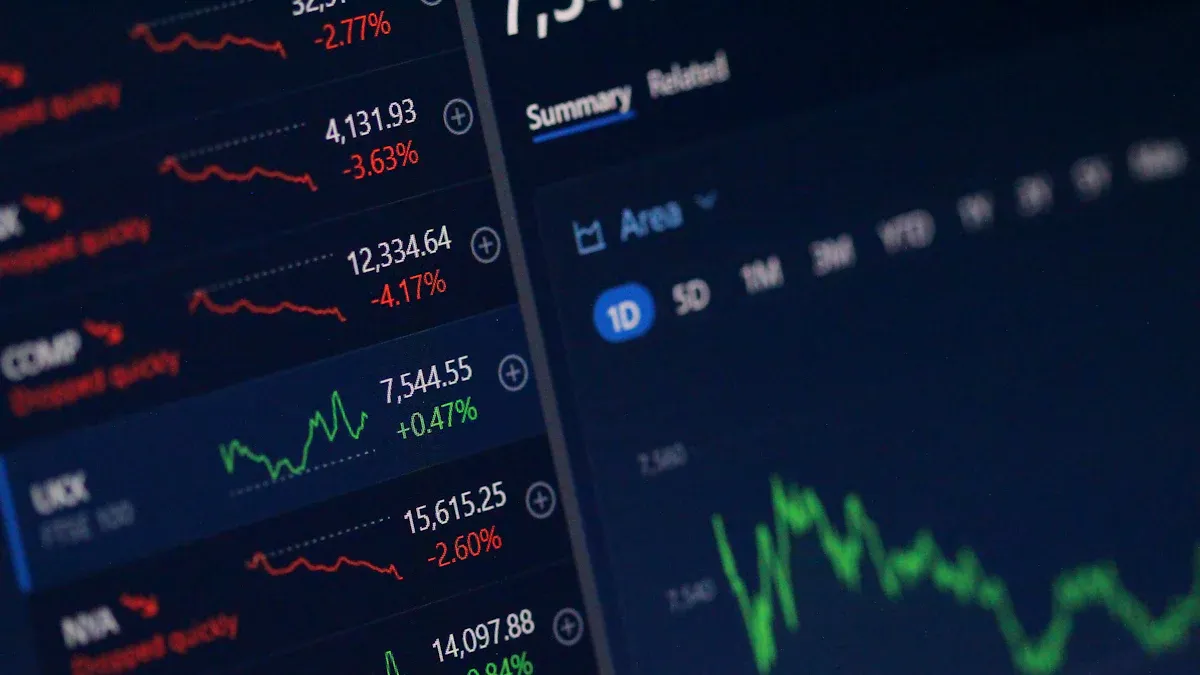
Image Source: unsplash
Main Channels
You can check stock prices through multiple channels. The most common methods include:
- HKEX Official Website: Provides real-time and historical stock price data, suitable for checking the latest trends of Hong Kong-listed companies.
- Brokerage Trading Platforms: Most brokers offer online or mobile apps, allowing you to check stock prices and trade anytime.
- Financial News Websites: Such as Yahoo Finance, Bloomberg, and Reuters, these sites provide not only stock price information but also company news and analysis reports.
- Transfer Agent Websites: Some companies publish shareholding changes and related announcements on transfer agent websites.
- AI Stock Selection Tools: Many platforms now use AI to automatically analyze stock trends, annual reports, and news, helping you quickly screen high-potential stocks.
Choosing the right channel can improve the efficiency of checking stock prices. According to market data, using AI to automatically calculate technical indicators and data visualization tools can help you understand stock price trends more intuitively. AI-powered in-depth annual report analysis can also help you quickly grasp a company’s financial status, reducing manual time costs.
Tip: Checking stock prices through multiple channels can reduce information bias and improve the accuracy of investment decisions.
Operation Steps
When checking stock prices, you can follow these steps:
- Choose a Platform: Decide whether to use HKEX, a brokerage platform, or a financial news website.
- Enter the Stock Code or Company Name: Most platforms have a search bar for quick access to the target company.
- View Real-Time or Historical Stock Prices: You can select different time ranges to observe price changes.
- Refer to Technical Indicators and Candlestick Charts: Using data visualization tools (e.g., mplfinance, plotly), you can analyze stock price trends more intuitively.
- Combine Announcements and Financial Reports: You should also check company announcements and financial reports to understand the latest news affecting stock prices.
Many professionals use A/B testing to optimize the enquiry process. For example, they compare the effectiveness of different platforms or features based on click-through rates and conversion rates. About 70% of professionals use Google Data Studio to automatically connect data, regularly checking for updates to ensure accurate analysis results.
Tip: You can periodically review your enquiry steps and use data analysis tools to improve decision-making efficiency.
Holding Records
In addition to checking stock prices, you can use the Central Clearing and Settlement System (CCASS) to check holding records. This service allows you to understand the shareholding changes of major investors, institutions, or key shareholders. Simply visit the HKEX CCASS webpage, enter the company name or stock code, and view the latest shareholding distribution.
AI-assisted tools can also help you analyze holding records, identifying abnormal changes from big data to predict market trends. These tools can overcome emotional biases, providing objective data analysis and enhancing your investment judgment.
Remember: Checking holding records helps you understand the actions of major market players, and when combined with stock price enquiries, allows for a more comprehensive assessment of investment risks.
Precautions for Checking Stock Prices
Data Reliability
When checking stock prices, you must pay attention to the timeliness and reliability of the data source. Different platforms have varying data update speeds, and some websites may have delays of a few minutes. You should prioritize official channels, such as the HKEX website or major brokerage platforms, which typically provide the most accurate and real-time data.
Tip: Avoid relying on a single source. Compare data from multiple platforms to ensure consistency. If you notice significant price discrepancies, hold off on placing orders and investigate the cause first.
You should also ensure that the data is verified. Some third-party websites may have errors or omissions. When checking stock prices, choose reputable websites to minimize judgment errors.
Trading Volume and Indicators
When checking stock prices, don’t focus solely on price. Trading volume and financial indicators are equally important. Trading volume reflects market activity. A sudden spike in volume indicates significant market attention to the stock, possibly due to major news or capital inflows.
You can refer to the following common indicators:
| Indicator Name | Description |
|---|---|
| Price-to-Earnings Ratio (PE Ratio) | Reflects the ratio of a company’s stock price to its earnings per share. A high value may indicate an overvalued stock. |
| Price-to-Book Ratio (PB Ratio) | Reflects the ratio of a company’s stock price to its net asset value per share. A low value may indicate an undervalued stock. |
| Trading Volume | Reflects the level of market buying and selling activity. High volume indicates high market attention. |
You can use these indicators to determine whether a stock is worth investing in. For example, if a stock’s PE ratio is significantly higher than its industry peers, you should pay extra attention to its growth potential and risks.
Tip: You can set alerts for trading volume or PE ratio thresholds, so the system notifies you when values are abnormal.
Announcements and Financial Reports
When checking stock prices, you should also pay attention to company announcements and financial reports. Announcements reflect the company’s latest developments, such as earnings releases, mergers and acquisitions, or board changes, which directly impact stock prices.
Financial reports provide detailed data on a company’s operating conditions. You can learn about a company’s revenue, profits, assets, and liabilities from financial reports. When a company’s profits grow significantly, it often drives stock price increases. Conversely, if financial reports show losses, the stock price may decline.
You should also pay attention to sensitive information, such as insider shareholding changes or major litigation, which may be reflected in stock price fluctuations in advance.
Note: Regularly check announcements and financial reports alongside stock prices to fully grasp market trends.
Interpreting Enquiry Results
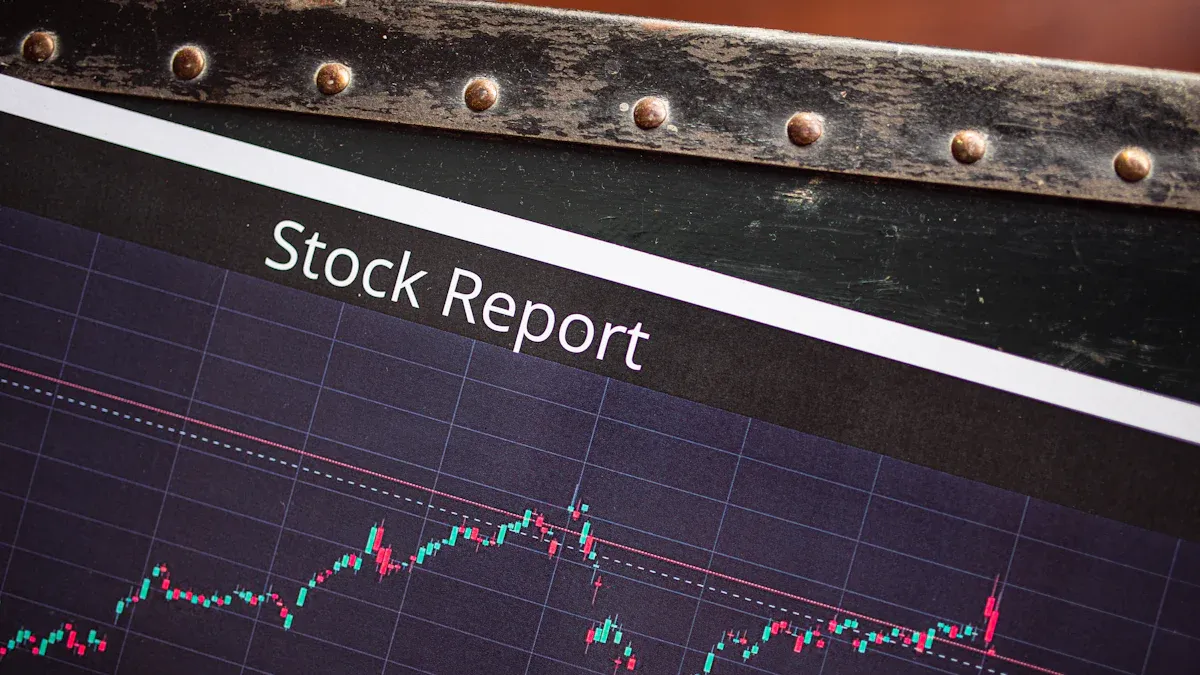
Image Source: pexels
Trend Analysis
After checking stock prices, the most important step is learning to analyze trends. You can use “hypothetical thinking” to analyze data, first imagining different scenarios and then checking if the data supports your ideas. You should learn to question assumptions and correlations, avoiding reliance on surface-level numbers. Observe data from multiple perspectives, such as trading volume, market news, and technical indicators, to reduce the risk of being misled by a single indicator. You should also distinguish between false positives and false negatives to avoid misjudging trends. Many experts use positioning or “small-to-big” strategies to identify major trends from minor changes. You can refer to life and business case studies to improve your statistical thinking skills.
Abnormal Fluctuations
When you notice sudden significant stock price fluctuations, be extra cautious. These abnormal fluctuations may result from breaking news, capital flows, or changes in market sentiment. You can use data analysis tools to review past fluctuation records and determine if the current change is unusual. You can also compare the trends of similar stocks to see if the anomaly is specific to one company. When encountering abnormal fluctuations, check announcements and news first to understand the reasons before deciding whether to act.
Analyst Role
Analysts use many advanced tools when interpreting stock price enquiry results. For example, they use text analysis and machine learning to monitor news, social media, and trading data. When a stock experiences consecutive limit-up days, data platforms automatically issue alerts, notifying regulators or brokers. International stock exchanges also use machine learning to assess abnormal trading risks and uncover insider trading networks. Brokers in Taiwan and Japan use visualization tools and customer segmentation models to improve analysis efficiency and predictive capabilities. You can adopt analysts’ approaches, leveraging data tools to enhance your judgment.
Practical Suggestions
Regular Tracking
You should regularly track data changes for different types of stocks. High-momentum breakout stocks are suitable for momentum and relative strength indicators, while stocks weakening from highs should focus on strength cycle indicators. Trending stocks can use radial trend indicators, while range-bound stocks are suitable for Adaptive Trend indicators. These technical indicators are supported by statistical and technical analysis. You can use trading volume, moving averages, MACD, and other indicators to identify stock trends and turning points, improving the efficiency and accuracy of your stock analysis.
Tip: Set reminders to check relevant announcements and news promptly when technical indicators show abnormalities.
Diverse Information
When checking stock prices, don’t rely on a single data point. Combine announcements, financial reports, technical indicators, and market news to understand a company’s operating conditions and market sentiment from different angles. You can also refer to analysts’ reports and big data analysis results to improve your judgment. Diverse information helps reduce errors and allows you to more comprehensively grasp market trends.
Avoid Blind Following
Avoid blindly following trends or emotional trading. You can use scientific methods and big data backtesting to build personalized investment strategies. Here are some effective practices:
- Use historical data to validate strategies, reducing the impact of news noise.
- Set rules for stock selection, trading conditions, take-profit, and stop-loss to find a profitable formula that suits you.
- Emphasize risk management, accumulate experience, and avoid repeating mistakes.
- Focus on data analysis rather than relying solely on news.
Technical analysis should be based on scientific methods and statistical inference, allowing you to extract useful knowledge from market data and reduce the risk of losses.
When checking stock prices, you can quickly grasp market trends. Combining announcements, financial reports, and sensitive data can enhance your investment judgment. It’s recommended to use various enquiry tools and learn to analyze data. With continuous practice, your investment decisions will become more accurate.
Continuous learning and practice will help you walk more steadily on the investment path.
FAQ
Which platform is the most reliable for checking stock prices?
You should prioritize the HKEX official website or major brokerage platforms. These platforms offer fast updates and high accuracy. Avoid relying solely on third-party websites.
How to judge abnormal stock price fluctuations?
Observe trading volume, news, and announcements. If a stock price suddenly surges or plummets, first check for major news or announcements.
What is the use of checking holding records?
Checking holding records helps you understand the actions of major investors or institutions, aiding in judging market players’ buying and selling intentions and improving investment judgment.
How often should I check announcements and financial reports?
You should review financial reports quarterly. Check announcements immediately when they are released to stay updated on the company’s latest developments.
Is checking stock prices a paid service?
Most basic stock price enquiry services are free. Some advanced analysis tools or real-time data platforms may charge fees, approximately USD10–USD50 per month, depending on exchange rates and features.
Stock price fluctuations reveal market trends, but do complex data and cross-border investments overwhelm you? BiyaPay offers a seamless platform to trade US and Hong Kong stocks without offshore accounts, effortlessly seizing market opportunities. Enjoy a 5.48% annualized yield savings product with flexible access.
Real-time exchange rate tracking supports USD, HKD, and over 30 fiat currencies with USDT conversions, while global remittances to 190+ countries feature transfer fees as low as 0.5%. Sign up for BiyaPay today to enhance your investment decisions and manage global funds with ease!
*This article is provided for general information purposes and does not constitute legal, tax or other professional advice from BiyaPay or its subsidiaries and its affiliates, and it is not intended as a substitute for obtaining advice from a financial advisor or any other professional.
We make no representations, warranties or warranties, express or implied, as to the accuracy, completeness or timeliness of the contents of this publication.
Related Blogs of

US Stock Market Holiday Countdown: How Investors Should Position for Next Week's Trading


Focusing on AI and Semiconductors: In-Depth Analysis of 10 Leading Future US Tech Stocks


US-China Trade War Enters New Phase: How the Tech Industry Can Respond to Supply Chain Impacts

How to Choose US Major Indices: Pros and Cons Analysis of S&P 500, Dow Jones, and Nasdaq
Choose Country or Region to Read Local Blog
 Australia
 Austria
 Belgium
 Canada
 Cyprus
 Czech Republic
 Denmark
 Estonia
 Finland
 France
 Germany
 Greece
 Hong Kong
 India
India Indonesia
 Ireland
 Italy
Italy Japan
Japan Latvia
 Lithuania
 Luxembourg
 Malaysia
 Malta
Malta Morocco
 Nepal
Nepal Netherlands
 New Zealand
 Norway
 Pakistan
 Philippines
 Poland
 Portugal
 Romania
 Singapore
 Slovakia
 Slovenia
 South Africa
 South Korea
 Spain
Spain Sweden
 Thailand
 The United States
 Turkey
 United Arab Emirates
 United Kingdom
 Vietnam
Contact Us




BIYA GLOBAL LLC is a licensed entity registered with the U.S. Securities and Exchange Commission (SEC No.: 802-127417); a certified member of the Financial Industry Regulatory Authority (FINRA) (Central Registration Depository CRD No.: 325027); regulated by the Financial Industry Regulatory Authority (FINRA) and the U.S. Securities and Exchange Commission (SEC).
BIYA GLOBAL LLC is registered with the Financial Crimes Enforcement Network (FinCEN), an agency under the U.S. Department of the Treasury, as a Money Services Business (MSB), with registration number 31000218637349, and regulated by the Financial Crimes Enforcement Network (FinCEN).
BIYA GLOBAL LIMITED is a registered Financial Service Provider (FSP) in New Zealand, with registration number FSP1007221, and is also a registered member of the Financial Services Complaints Limited (FSCL), an independent dispute resolution scheme in New Zealand.