Is Zelle a Wire Transfer or an ACH? Things You Should Know




Image Source: pexels
When you consider whether Zelle is a wire transfer or ACH, the answer might surprise you. It is neither a traditional wire transfer nor a typical ACH transfer. You can think of it as a “bank-to-bank instant messaging tool” that achieves near-instant payments through bank collaboration.
This convenience makes P2P payments very popular in the United States. Data shows that in 2023, about 81% of U.S. consumers used such apps at least once.
Zelle’s reliability stems from its strong backing, as it was jointly founded by several top U.S. banks, including:
- Bank of America
- JPMorgan Chase
- Wells Fargo
- Capital One
- PNC Bank
- Truist
- U.S. Bank
Key Points
- Zelle is not a wire transfer nor a traditional ACH. It is an instant payment network built on ACH and integrated with RTP technology.
- Zelle transfers are fast and usually free, but transactions are almost irrevocable. It is best for small payments between friends.
- ACH transfers are slow and low-cost but offer limited reversal protection. It is suitable for handling recurring bills and payroll.
- Wire transfers are the fastest and most expensive, with irrevocable transactions. It is ideal for large, urgent, or international transfers.
- When using Zelle, you should only transfer to people you trust. Before transferring, you must carefully verify the recipient’s information.
Is Zelle a Wire Transfer or ACH? Core Definition Analysis
To truly understand the answer to whether Zelle is a wire transfer or ACH, you need to first clarify the definitions and operations of each. They represent three completely different philosophies of fund transfer.
Zelle: ACH-Based Instant P2P Network
First, you need to know that Zelle is a peer-to-peer (P2P) payment service. P2P payments allow you to transfer funds directly from your bank account to another person via a mobile app or online platform. You only need the recipient’s phone number or email address to initiate a transfer.
Zelle’s uniqueness lies in its operation mode. When you transfer via Zelle, you experience near-instant arrival, with funds typically appearing in the recipient’s account within minutes. However, behind this is a clever technical combination:
- Front-end experience: For you, the transfer is instant.
- Back-end settlement: The actual clearing of the transaction mostly occurs later through the traditional ACH network.
Zelle is operated by Early Warning Services LLC, and its network covers over 2,300 U.S. banks and credit unions. Recently, it has integrated with the Real-Time Payments (RTP) network. If both parties’ banks support RTP, the transaction achieves true real-time clearing. If not, it still completes within minutes via Zelle’s own network, providing you with a seamless instant experience.
So, when considering whether Zelle is a wire transfer or ACH, you can view it as an “upgraded” instant payment network built on ACH and fused with RTP technology.
ACH: Traditional Batch Electronic Transfer System
ACH (Automated Clearing House) is the backbone network of the U.S. financial system. You can imagine it as a system that processes large batches of non-urgent electronic payments. Its original design was not for speed but for efficiency and low cost.
ACH transfers are typically used for the following types of transactions:
- Companies issuing payroll to employees
- Your monthly auto-payments for utilities or rent
- Government-issued tax refunds or Social Security benefits
- Business payments to suppliers
Standard ACH transfers usually take 1 to 3 business days to complete. This is because the ACH system operates in batch processing and only handles transactions on banking business days. Although there is now a “Same-Day ACH” option to speed things up, it usually requires extra fees and has strict submission deadlines.
Wire Transfer: High-Security Real-Time Payment Channel
Wire transfer is a payment channel designed for transactions requiring the highest speed and security. Unlike ACH’s batch processing, wire transfers are direct, real-time transfers between banks. When you initiate a wire transfer, funds are immediately deducted from your account and sent directly to the recipient bank.
Wire transfers mainly rely on two core networks:
| Network Type | Geographic Scope | Processing Method | Primary Use |
|---|---|---|---|
| Fedwire | U.S. only | Real-Time Gross Settlement (RTGS), direct fund processing | Fast, large domestic transfers, such as home down payments. |
| SWIFT | Global | Messaging network sending payment instructions, does not handle funds directly | International payments, such as paying overseas suppliers or receiving remittances. |
Due to its high security and real-time nature, wire transfers are subject to strict legal regulations, such as Article 4A of the U.S. Uniform Commercial Code. Banks use encryption and identity verification to protect transaction security. This makes wire transfers the most reliable choice for large, urgent, or critical transactions (such as real estate deals).
Now you clearly understand the core differences among the three. Discussing whether Zelle is a wire transfer or ACH is actually comparing a convenient daily tool, a robust batch system, and a high-security professional channel.
Core Three Factors Comparison: Speed, Cost, and Security
Image Source: unsplash
Once you understand the basic definitions of Zelle, ACH, and wire transfers, choosing the right method becomes clear. Your decision will depend on three key factors: speed, cost, and security. Let’s compare them one by one.
Speed: Minutes vs. Business Days
Transfer speed is often the first factor you consider when choosing a payment method. The differences among the three are significant.
- Zelle: Almost instant When you transfer with Zelle, if the recipient is already enrolled, funds usually arrive in the other party’s bank account within minutes.
Note: If your friend is not yet enrolled in Zelle, they will first receive an enrollment notification. After they complete enrollment, the money may take 1 to 3 business days to arrive.
- ACH transfer: Requires patience Standard ACH transfers are not designed for speed. They usually take 1 to 3 business days to clear and settle. Although there is a “Same-Day ACH” option, it typically requires extra fees and has strict time limits.
- Wire transfer: Same-day arrival Wire transfers are designed for emergencies. Domestic U.S. wire transfers can usually be completed within the same business day, especially if initiated before the bank’s cutoff time.
To give you a more intuitive sense of speed differences, refer to the table below:
| Payment Method | Average Processing Time |
|---|---|
| Zelle | Minutes |
| Standard ACH Transfer | 1-3 business days |
| Domestic Wire Transfer | Usually same day |
| International Wire Transfer | 1-5 business days |
Cost: Free vs. Low Cost vs. High Fee
Cost is another important consideration. From completely free to quite expensive, the cost structures of the three differ greatly.
- Zelle: Usually free For individuals, one of Zelle’s biggest advantages is that it’s free. Whether sending or receiving, banks partnered with Zelle typically do not charge you any handling fees.
- ACH transfer: Extremely low cost ACH transfers are very inexpensive. For transfers between personal bank accounts, many banks (like Chase, Capital One) offer free services. Even when fees apply, they are usually around $3.
- Wire transfer: Highest fees Wire transfers are the most expensive of the three. You pay for their high speed and security. Domestic U.S. wire transfer fees typically range from $25 to $35. The chart below shows wire transfer fees at some major U.S. banks.
Overall, if you want zero cost, Zelle is the top choice. For routine bills, ACH is economical. Only for urgent or large transactions are wire transfer’s high fees justified.
Security: Can Transactions Be Reversed?
In terms of security, the biggest difference among the three is whether transactions can be reversed. This directly affects your fund safety.
- Zelle: Almost irrevocable You should treat Zelle transfers as handing over cash. Once you click “send,” funds immediately leave your account and are almost impossible to reverse. Banks cannot help you recover sent funds unless the recipient agrees to return them. This makes Zelle highly risky in fraud cases.
- Wire transfer: Also irrevocable Wire transfers are designed as final settlement tools. Once funds reach the recipient bank, the transaction is complete and extremely difficult to reverse. This certainty is why it’s used for large transactions like home purchases.
- ACH transfer: Offers limited reversal protection Unlike the first two, the ACH network provides some protection. In certain cases, ACH transfers can be reversed. This gives you a buffer for errors or disputes. Common reversible situations include:
- Transaction errors: For example, you entered the wrong amount or account number.
- Unauthorized transactions: If your account is compromised, you can appeal to the bank.
- Recipient fails to deliver: In some business transactions, if the other party fails to provide agreed services, you can initiate a dispute.
Core security tip: Zelle’s convenience comes with irrevocable risk. Therefore, you should only use it to transfer to trusted family and friends. When thinking about whether Zelle is a wire transfer or ACH, remember it is more like cash in terms of security mechanisms, not protected bank transfers.
Best Choices for Different Scenarios
Now that you understand the differences between Zelle, ACH, and wire transfers, the next step is to learn how to make wise choices in different situations. Each payment method excels in its own domain.
Zelle: Daily Small Payments Between Friends
When you need to quickly settle small expenses with friends or family, Zelle is your best tool. It was designed to simplify these everyday peer-to-peer (P2P) payments.
You can use Zelle for the following common scenarios:
- Splitting bills: Whether dining out, watching movies, or sharing travel costs, you can easily collect from friends with Zelle. It can even automatically calculate each person’s share.
- Paying rent: If your landlord uses Zelle, you can pay monthly rent conveniently.
- Paying service fees: You can use it to pay trusted babysitters, tutors, or gardeners for their services.
Remember, Zelle’s core advantages are convenience and being free. It’s like digital cash, best for use among trusted acquaintances.
ACH: Recurring Bills and Payroll
When handling regular, predictable income and expenses, ACH is the most reliable and economical choice. Its stability and low cost make it ideal for automated financial management.
ACH transfers have a payment success rate of up to 98% because they are directly linked to bank accounts, unaffected by issues like credit card expiration. You can confidently use it to:
- Set up monthly auto-payments for utilities, car loans, or mortgages.
- Receive company payroll.
- Regularly transfer to your investment or savings accounts.
Under the strict regulations of the National Automated Clearing House Association (NACHA), ACH provides a secure, reliable payment system to keep your routine finances organized.
Wire Transfer: Home Purchases or Urgent Large Transfers
When facing large amounts and time-sensitive transactions, wire transfer is the only trustworthy choice. Its high security and real-time arrival are unmatched by other methods.
Wire transfers have virtually no transaction amount limit, making them the standard tool for:
- Paying home down payments: Real estate transactions typically require wire transfers to ensure funds are securely and quickly transferred to escrow accounts.
- Handling urgent business payments: When a business needs to pay a supplier a large amount immediately, wire transfer ensures same-day completion.
- International remittances: When transferring large sums overseas, wire transfer provides a reliable path via the SWIFT network.
Initiating a wire transfer requires precise recipient information, such as the escrow company’s bank name, account number, and routing number. Although costly, it offers the highest level of security for your large funds.
Must-Know Risks and Tips for Using Zelle
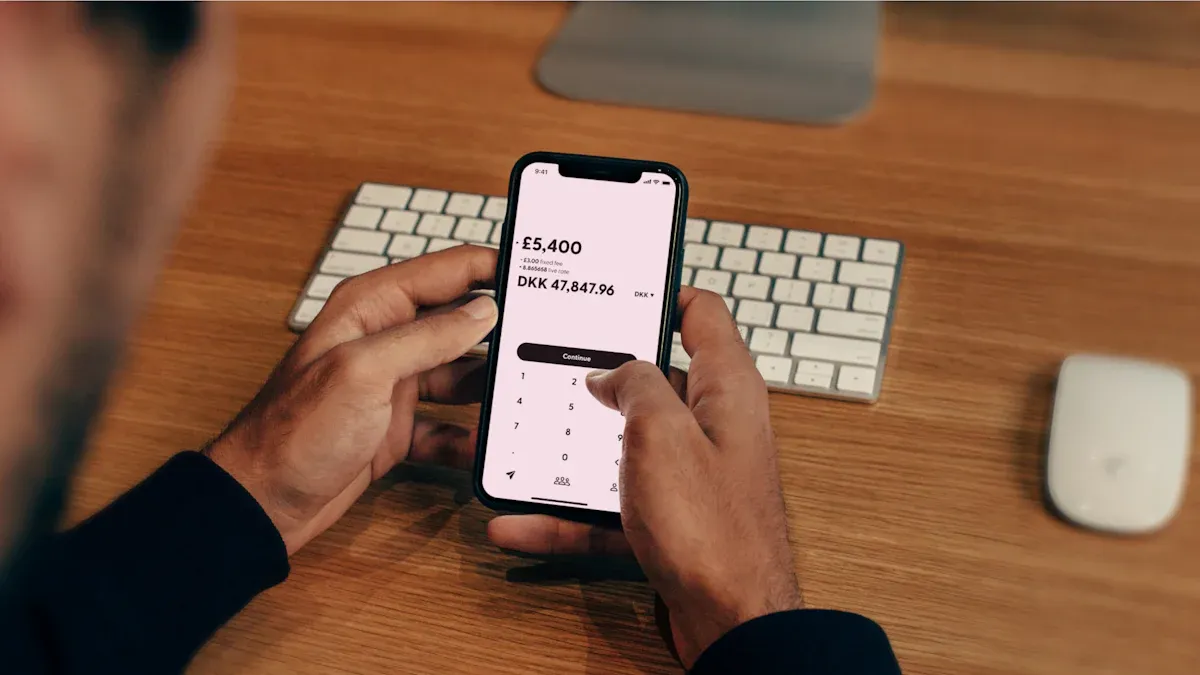
Image Source: unsplash
Zelle’s instant arrival feature is very convenient, but this convenience also brings unique risks. Before enjoying its efficiency, you must understand how to use it safely to protect your funds from loss.
Understand Bank-Set Transaction Limits
To protect your account, your bank sets limits on Zelle transfers. These limits are unrelated to your account balance and are proactive protective measures by the bank. Limits vary by bank and may adjust dynamically based on your account history and recipient.
For example, Bank of America and Wells Fargo typically have a daily transfer limit of $3,500 USD and a monthly limit of $20,000 USD.
Want to know your specific limits? You can usually find them in your bank’s mobile app:
- Log in to your mobile banking and go to the Zelle feature.
- Select “Send.”
- Below the amount input field, you’ll usually see a “Limits” link—click to view.
Prevent Fraud: Only Transact with Acquaintances
Zelle officially emphasizes repeatedly that it is designed for transfers between people you know and trust. This is the most important safety rule for using Zelle.
Core security principle: Treat Zelle transfers as handing over cash. Once you authorize payment, funds are almost unrecoverable. Zelle does not provide fraud protection for transactions with strangers.
Scammers often exploit Zelle’s irrevocability to commit fraud on platforms like Facebook Marketplace or Craigslist. They may pose as sellers, ask for a deposit upfront, and disappear after receiving payment. Therefore, never use Zelle to pay unknown individuals or online merchants.
Always Verify Recipient Information Before Transfer
A simple input error can permanently send your money to a stranger. Since Zelle transactions are hard to reverse, careful verification before transfer is crucial.
You can follow these three steps to ensure no mistakes:
- Confirm contact information: Before transferring, confirm the phone number or email address with the recipient via phone or other means.
- Verify registered name: After entering the recipient’s information, Zelle displays their registered name (e.g., “Enrolled in Zelle as [First Name Last Name]”). Carefully check that this name matches the intended recipient.
- Send a test transfer: If it’s your first transfer to someone or a large amount, send a $1 USD test transaction first, confirm receipt, then send the rest.
Now, regarding whether Zelle is a wire transfer or ACH, you should have a clear answer. It is an instant payment tool based on the ACH network, excelling in speed and cost. However, its irrevocable transaction nature means you can only use it in specific scenarios.
Final advice: Use Zelle for small transfers with trusted friends and family. For large, business, or stranger transactions, prioritize wire transfers or ACH with better security protections.
FAQ
Can I use Zelle outside the United States?
No. Zelle is a U.S.-only service. You must have a U.S. bank account and a U.S. phone number to register and use it. It does not support any form of international transfer.
When planning cross-border flows or multi-currency spending, it helps to separate price discovery from the payment rail: quantify costs first, then choose how to move funds.
BiyaPay, a multi-asset trading wallet, supports fiat–crypto conversion and unified account management so you can “price before you execute.” For example, before travel or overseas purchases, use the free Exchange Rate Checker to assess live rates and potential costs; for online and subscription payments, apply for a Virtual Card to reduce reliance on cash and instant P2P tools while centralizing spend control; and for product and compliance details, visit the BiyaPay website.
Operating with regulatory registrations in multiple jurisdictions (e.g., US MSB, NZ FSP), BiyaPay emphasizes security and compliance while offering a transparent-cost, single-account experience. This doesn’t alter the Zelle/ACH/wire framework discussed here—it simply adds a quantifiable option for cross-border and multi-currency needs.
What if I send Zelle to the wrong person?
You need to immediately contact the recipient and request they return the money.
Since Zelle transfers are almost instant and irrevocable, your bank cannot help recover the funds. Therefore, always carefully verify recipient information before transferring.
My bank doesn’t support Zelle—can I still use it?
Yes. If your bank is not in Zelle’s partner network, you can download the standalone Zelle mobile app. Then, link your Visa® or Mastercard® debit card to send and receive payments.
What’s the difference between Zelle and PayPal or Venmo?
The main difference is the flow of funds. With Zelle, funds transfer directly between bank accounts. With PayPal or Venmo, funds first stay in their app balance, and you need to manually withdraw to your bank.
*This article is provided for general information purposes and does not constitute legal, tax or other professional advice from BiyaPay or its subsidiaries and its affiliates, and it is not intended as a substitute for obtaining advice from a financial advisor or any other professional.
We make no representations, warranties or warranties, express or implied, as to the accuracy, completeness or timeliness of the contents of this publication.
Related Blogs of

How to Convert Cryptocurrency Donations Received by AI Open-Source Projects into Fiat Currency as Development Funds Without Loss?

How to Convert Tokens Earned from Playing Web3 Football Games into Alipay Balance with Minimal Loss?


The Wisdom of Capital Sedimentation: After Winning U, Don’t Rush to Convert to RMB – Earn High USD Interest in a Multi-Asset Wallet


From Cryptocurrency to OpenAI Bill: A 3-Minute Fiat Flash Exchange in Practice
Choose Country or Region to Read Local Blog
 Australia
 Austria
 Belgium
 Canada
 Cyprus
 Czech Republic
 Denmark
 Estonia
 Finland
 France
 Germany
 Greece
 Hong Kong
 India
India Indonesia
 Ireland
 Italy
Italy Japan
Japan Latvia
 Lithuania
 Luxembourg
 Malaysia
 Malta
Malta Morocco
 Nepal
Nepal Netherlands
 New Zealand
 Norway
 Pakistan
 Philippines
 Poland
 Portugal
 Romania
 Singapore
 Slovakia
 Slovenia
 South Africa
 South Korea
 Spain
Spain Sweden
 Thailand
 The United States
 Turkey
 United Arab Emirates
 United Kingdom
 Vietnam
Contact Us




BIYA GLOBAL LLC is registered with the Financial Crimes Enforcement Network (FinCEN), an agency under the U.S. Department of the Treasury, as a Money Services Business (MSB), with registration number 31000218637349, and regulated by the Financial Crimes Enforcement Network (FinCEN).
BIYA GLOBAL LIMITED is a registered Financial Service Provider (FSP) in New Zealand, with registration number FSP1007221, and is also a registered member of the Financial Services Complaints Limited (FSCL), an independent dispute resolution scheme in New Zealand.