How to Exchange Canadian Dollars in the United States




Image Source: pexels
Planning a self-driving tour in the Rocky Mountains? Or preparing to pay tuition at a Canadian school? You may be thinking about a core question: banks, online platforms, or airport exchange points, which is the most cost-effective and convenient way to exchange CAD?
Different exchange methods vary greatly in exchange rates and fees. Making a wise choice can save you a considerable amount of money.
Key Points
- Online platforms offer better exchange rates and transparent fees, making them the preferred choice for exchanging CAD.
- Avoid exchanging currency at airports, hotels, and tourist attractions, where exchange rates are usually poor.
- For small amounts, withdrawing cash at Canadian ATMs using a US debit card is more cost-effective.
- For large amounts, using online platforms like Wise can save more fees.
- Before exchanging, query the real-time exchange rate and set rate alerts to help you seize the best exchange timing.
USD to CAD: Channel Comparison
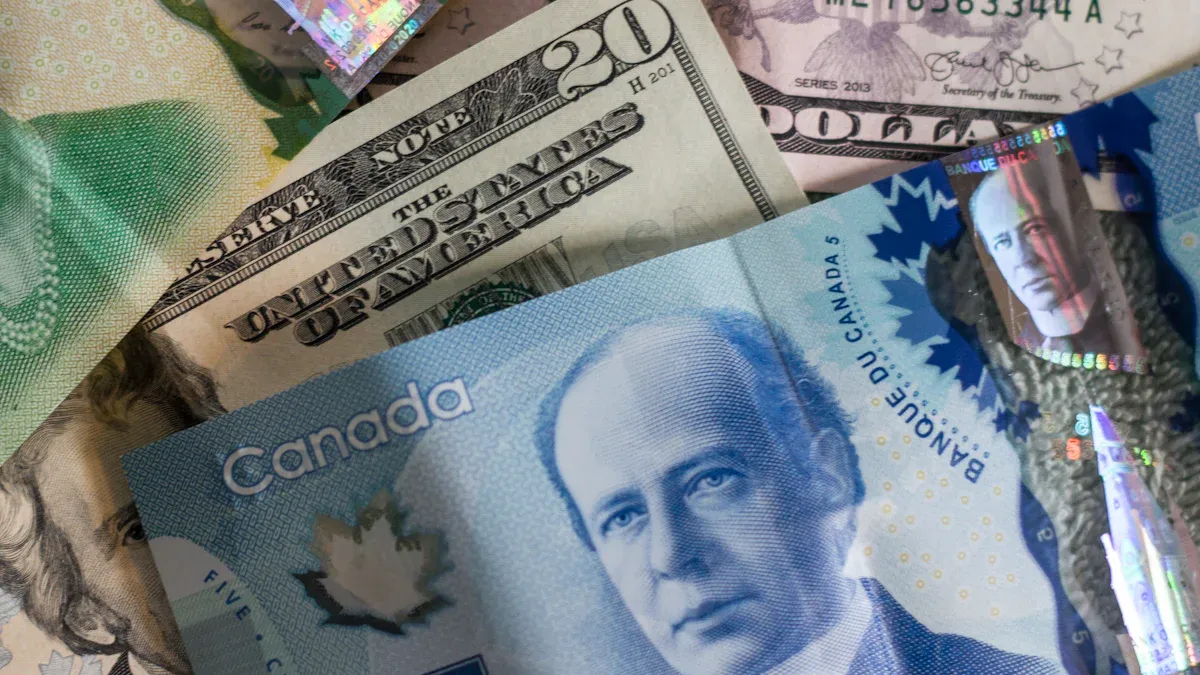
Image Source: unsplash
Once you’ve decided to exchange CAD, the next step is to choose the right channel. Different channels not only affect your final costs but also determine the convenience of the exchange. Let’s dive deep into the analysis to help you make the wisest choice.
Online Platforms vs. Traditional Banks
Online platforms and traditional banks are the two most mainstream exchange methods, but they differ significantly in exchange rates and fees.
- Online Platforms (e.g., Wise): These platforms typically trade at rates close to the “mid-market rate”, meaning you won’t lose money due to hidden markups in the exchange rate. Their fee structures are very transparent, usually charging only a small, disclosed service fee. Studies show that online platforms’ conversion fees can be as low as 0.35% to 2%.
- Traditional Banks (e.g., your account-holding bank): Banks may feel reliable, but they are generally not competitive in exchange rates. They add a 1% to 5% markup to the market rate, which is hidden in the quote and hard to notice. Although some banks waive fees for their customers, poorer exchange rates may cause you to lose more.
To give you a more intuitive understanding, let’s look at an example of exchanging $1,000 USD:
| Provider | Exchange Rate (1 USD) | Transfer Fee (USD) | Recipient Receives (CAD) |
|---|---|---|---|
| Bank of America | 1.37785 | 10.15 | 1,363.86 |
| Wise | 1.33996 | 0.00 | 1,339.96 |
Conclusion: If you seek the best exchange rate and fee transparency, online platforms are the superior choice. If you are unfamiliar with online operations and don’t mind paying a slightly higher price for convenience and traditional services, your account-holding bank is also a backup option.
ATM Withdrawal vs. Currency Exchange Kiosks
If you are already in the United States or have just arrived in Canada and need a small amount of cash for emergencies, ATMs and currency exchange kiosks are two common choices.
Currency Exchange Kiosks
Note: Be sure to avoid currency exchange kiosks at airports, hotels, and tourist attractions. These places exploit travelers’ convenience needs, offering the worst exchange rates and high fees, typical “tourist traps”. The rates on billboards may not include all costs, and the final amount you receive will be much less than expected.
ATM Withdrawal Directly withdrawing CAD cash using your US bank card at ATMs in the United States or Canada is usually a more cost-effective choice.
- Better Exchange Rates: ATMs typically use interbank wholesale rates, very close to the mid-market rate, far more favorable than exchange kiosks.
- Convenient Operation: ATM networks are widely covered, allowing withdrawals anytime.
Before departure, you need to confirm two pieces of information with your card-issuing bank:
- Whether the card supports international withdrawals.
- Withdrawal fees (usually including the issuing bank’s fee and the local ATM operator’s fee).
Choices for Small and Large Amount Exchanges
The size of the exchange amount directly affects which method is most cost-effective. When thinking about how to exchange, the amount is a key decision point.
- Small Amount Exchange (below $500 USD):
- Recommended: Use your bank debit card to withdraw cash at Canadian ATMs, or directly use a multi-currency supporting credit card for spending.
- Not Recommended: Avoid using airport or hotel exchange kiosks, where high fixed fees and poor rates make small exchanges very uneconomical.
- Large Amount Exchange (above $10,000 USD):
- Recommended: Use professional online remittance platforms (like Wise) or currency exchange providers (like CurrencyTransfer). These services are designed for large transactions, offering more competitive rates than banks, helping you save up to 85% in fees.
- Not Recommended: Avoid wire transfers through banks unless using institutions like TD Bank that provide specialized cross-border banking services. Regular bank wire transfers not only have poor rates but also relatively high fees.
Balancing Exchange Rates and Fees
To calculate the true cost of a transaction, you cannot look only at “fees” or “exchange rates” separately. The real cost is the sum of both.
The real profit source for banks and many exchange providers is the “markup” hidden in the exchange rate (Markup). They exchange at a rate lower than the true market level, and the difference becomes their profit.
To become a smart exchanger, you need to pay attention to the following points:
- Understand the Mid-Market Rate: This is the “real” rate used between banks and traders. Before exchanging, you can query real-time rates via XE.com or Google as a benchmark for comparison.
- Calculate the Spread: Compare the provider’s rate with the mid-market rate; the difference multiplied by your exchange amount is the “hidden fee” you lose due to the rate.
- Clarify All Disclosed Fees: Inquire and sum all visible fees, such as service fees, wire fees, intermediary bank fees, etc.
Total Cost = (Mid-Market Rate - Your Rate) × Exchange Amount + All Disclosed Fees
Choosing a platform with a clear fee structure and transparent rates is key to ensuring you understand how to exchange and get maximum value.
Online Platform Exchange Guide
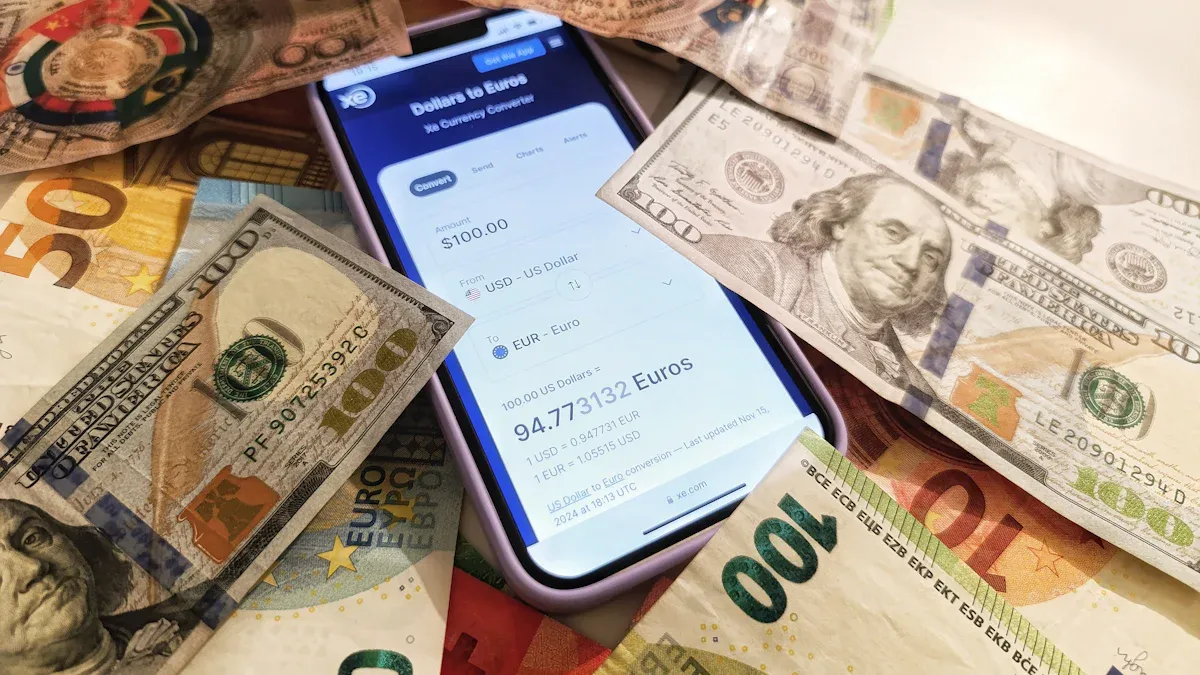
Image Source: pexels
Online platforms, with their favorable rates and transparent fees, have become the top choice for many in currency exchange. Mastering how to use these platforms can help you maximize the value of every dollar.
Overview of Mainstream Platforms
There are many excellent online platforms on the market, each with different features; you can choose based on your needs:
- Wise (formerly TransferWise): This is one of the most popular platforms. It offers rates close to the mid-market rate. You can apply for a Wise debit card, deposit USD first, and then convert in real-time as needed when spending in Canada, very flexible.
- Remitly / Panda Remit: These platforms often offer first-time remittance discounts for new users. A major advantage is support for
INTERAC e-Transfer, a very popular transfer method in Canada, allowing recipients to receive money faster and more conveniently. - Western Union: If you only need small online transfers under $1,500, Western Union is also a quick choice.
How to Exchange on Online Platforms
The exchange process on most online platforms is very simple. To understand how to exchange, just follow these steps:
- Register an Account: Choose a platform and create your free account.
- Identity Verification: Complete identity verification (KYC) as required by the platform; this is a necessary step to secure funds.
- Create a Remittance: Enter the USD amount you want to exchange and the recipient’s CAD bank information.
- Pay Funds: Pay USD to the platform via bank transfer (ACH) or debit card.
Most platforms have fast transfer speeds; for example, some Wise transfers arrive within minutes, while others usually take only 1-2 business days.
Fee Structure Breakdown
Platform fees typically consist of two parts: disclosed fees and exchange rate spread.
Caution: Beware of “zero fees” or “no hidden fees” promotions. The real cost may be hidden in poor rates. The most reliable comparison is the final CAD amount received.
- Disclosed Fees: This is a clear transfer service fee. For example, Wise’s fees start from 0.57%, and the debit card application fee is $9.
- Exchange Rate Spread: This is the gap between the platform’s rate and the mid-market rate, also the main profit source for many platforms.
Security and Verification Methods
Legitimate online platforms are very secure, using bank-level security measures to protect your funds and information.
- Two-Factor Authentication (2FA): Requires a second verification like a phone code during login or transfer, greatly enhancing account security.
- Data Encryption: All your personal information and transaction data are encrypted during transmission to prevent theft.
- Regulatory Compliance: These platforms are strictly regulated by financial institutions worldwide and follow “Know Your Customer” (KYC) and Anti-Money Laundering (AML) policies to ensure all transactions are legal and compliant.
Traditional Bank Exchange Guide
Although online platforms offer highly competitive rates, traditional banks remain a choice for many due to their convenience and reliability. If you are a loyal bank user or need to handle specific business, understanding how to exchange efficiently at a bank is equally important.
Advantages of Account-Holding Bank Exchange
Exchanging CAD at your own account-holding bank offers the greatest advantages of convenience and trust. You don’t need to register new accounts or adapt to new platforms. More importantly, many banks provide fee waivers for their customers.
- Bank of America and Citibank customers exchanging over $1,000 can usually enjoy fee-free services.
- U.S. Bank waives a $10 fee for exchange orders over $250.
- PNC Bank also provides transaction-free currency exchange for its customers.
Tip: Although fees may be waived, you still need to pay attention to the bank’s offered rate. This advantage is best for users who don’t pursue the ultimate rate but prefer traditional offline services.
Cross-Border Banking Services
If you need to frequently transfer funds between the US and Canada, regular wire transfers are not the best choice. Some banks offer specialized cross-border banking services as better solutions.
Take TD Bank and RBC Bank for example; they provide seamless fund management services across both countries. You can view and manage your US and Canadian accounts through one app and enjoy instant, free cross-border transfers. This completely avoids the multi-day wait and high fees of traditional wire transfers.
Wire Transfer vs. Cash Exchange
Banks provide two basic exchange methods: wire transfer and cash exchange; you need to choose based on usage.
| Exchange Method | Advantages | Disadvantages | Applicable Scenarios |
|---|---|---|---|
| Wire Transfer | Secure, suitable for large transfers | High fees, slow speed, poor rate | Paying tuition, real estate transactions |
| Cash Exchange | Instant access, simple operation | Requires advance reservation, carrying risk | Preparing small cash before travel |
If you need to exchange cash, be sure to call the branch in advance to confirm they have sufficient CAD inventory to avoid a wasted trip.
Hidden Costs of Bank Exchange
The biggest trap in bank exchange is “hidden costs”. Many banks advertise “low fees” or even “zero fees”, but the real cost is hidden in the rate.
Banks’ rates usually add a 3% to 5% “markup” (Markup) to the mid-market rate. This means for every $1,000 exchanged, you may lose $30 to $50 due to the rate.
Additionally, international wire transfers may incur extra “intermediary bank fees”, deducted directly from your remittance amount, resulting in the recipient receiving less than expected. When thinking about how to exchange, be sure to factor in these hidden costs.
Seizing the Best Exchange Timing
Besides choosing the right channel, timing the exchange can also help you get more CAD. Rates fluctuate daily; catching a good timing means real savings.
Real-Time Rate Query Tools
The first thing to do before exchanging is to understand the current “mid-market rate”. This is the real rate used between banks and traders and your benchmark for judging quotes.
When comparing quotes and computing the “all-in” cost, start with BiyaPay’s free Exchange Rate Comparison to see live USD/CAD mid-market rates and net proceeds across common channels—so fees and spreads are measured together. If you’re moving a larger tuition or rent amount to a Canadian bank, consider BiyaPay Remittance once you’ve reviewed compliance and fees, avoiding airport kiosks and opaque markups.
BiyaPay is a multi-asset wallet supporting flexible conversion across multiple fiats and digital assets, operating under a compliance framework (e.g., U.S. MSB, New Zealand FSP); see the website for details.
You can also use professional free tools to get this information:
- Xe: This platform is very reliable, offering real-time charts and historical data for global currencies. You can query rates anytime via its mobile app.
- Real-Time Chart Websites: Many financial sites provide real-time charts for USD/CAD (USDCAD), letting you visually see rate fluctuations.
How to Judge Rate Trends
Predicting rates is not easy, but understanding some basic methods can help you make better judgments. Professional traders often use technical indicators to analyze trends. You don’t need to be an expert, but knowing these concepts is useful:
- Moving Averages: Help identify long-term trend directions.
- Relative Strength Index (RSI): Used to determine if a currency is currently “overbought” or “oversold”, helping find potential reversal points.
Observing these simple chart patterns can give you a general idea of future rate directions.
Setting Rate Alerts
You can’t watch rate changes all the time. A smart way is to set rate alerts. When the rate reaches your target, you’ll automatically get notified.
Many platforms offer free rate alert services. You just set the target rate, and the system handles the rest.
- Wise**, Xe, **OFX and others allow you to easily create alerts. You can receive notifications via their mobile apps or email to exchange at the best time.
Key Factors Affecting Exchange Rates
USD and CAD rates are jointly influenced by both countries’ economic conditions and global market factors. Understanding these key factors helps you better comprehend rate fluctuation causes.
- Economic Data: Interest rates, inflation rates, and employment data from both countries are important indicators. For example, if the Fed raises rates, USD usually strengthens; conversely, strong Canadian economic data may appreciate CAD.
- Oil Prices: Canada is a major global oil exporter, with most oil sold to the US. Thus, oil prices greatly impact CAD. Generally, when international oil prices rise, CAD appreciates against USD; when prices fall, CAD may weaken.
Now, you’ve mastered various strategies for exchanging USD to CAD in the United States. To help you decide quickly, here’s a clear checklist:
- Small Emergency: Directly withdraw cash at Canadian ATMs using a US bank card.
- Large or Online Payment: Prioritize online platforms like Wise for the best rates.
- Prefer Traditional Services: Use your account-holding bank or cross-border services provided by banks like TD.
Remember, there is no absolute best method, only the one most suitable for your needs (amount, timing, convenience). A core tip: always avoid airport exchange points and plan ahead—this is key to saving money.
FAQ
Can I directly use a US credit card in Canada?
Yes. But first confirm if your credit card charges a foreign transaction fee (Foreign Transaction Fee). Choosing a card without this fee saves money. Rates are usually set by card networks (like Visa or Mastercard) and are relatively fair.
Do I need to notify my US bank before departure?
Yes, it’s strongly recommended. Setting a travel notice in advance prevents the bank from flagging overseas transactions as fraud and freezing your card. This ensures smooth spending or ATM withdrawals in Canada.
What’s the most cost-effective way to handle leftover CAD after travel?
There are several options for leftover CAD:
- Small Cash: Suggest spending at airport duty-free shops or saving for next trip.
- Large Cash: Exchanging back to USD usually has poor rates. If the amount is large, deposit into your Canadian bank account (if you have one).
*This article is provided for general information purposes and does not constitute legal, tax or other professional advice from BiyaPay or its subsidiaries and its affiliates, and it is not intended as a substitute for obtaining advice from a financial advisor or any other professional.
We make no representations, warranties or warranties, express or implied, as to the accuracy, completeness or timeliness of the contents of this publication.
Related Blogs of
Data-Driven Analysis: Shanghai Stock Index 2026 Earnings Growth Forecast


US Index ETF Investing 2025: From Beginner to Pro – Strategies and Top Recommendations


Want to Invest in US Stocks from Taiwan? Complete Guide to Popular Brokers: Account Opening Process & Pros/Cons Analysis


2025 Year-End Outlook: Can the Nasdaq Continue Its Growth Legend Amid Volatility?
Choose Country or Region to Read Local Blog
 Australia
 Austria
 Belgium
 Canada
 Cyprus
 Czech Republic
 Denmark
 Estonia
 Finland
 France
 Germany
 Greece
 Hong Kong
 India
India Indonesia
 Ireland
 Italy
Italy Japan
Japan Latvia
 Lithuania
 Luxembourg
 Malaysia
 Malta
Malta Morocco
 Nepal
Nepal Netherlands
 New Zealand
 Norway
 Pakistan
 Philippines
 Poland
 Portugal
 Romania
 Singapore
 Slovakia
 Slovenia
 South Africa
 South Korea
 Spain
Spain Sweden
 Thailand
 The United States
 Turkey
 United Arab Emirates
 United Kingdom
 Vietnam
Contact Us




BIYA GLOBAL LLC is a licensed entity registered with the U.S. Securities and Exchange Commission (SEC No.: 802-127417); a certified member of the Financial Industry Regulatory Authority (FINRA) (Central Registration Depository CRD No.: 325027); regulated by the Financial Industry Regulatory Authority (FINRA) and the U.S. Securities and Exchange Commission (SEC).
BIYA GLOBAL LLC is registered with the Financial Crimes Enforcement Network (FinCEN), an agency under the U.S. Department of the Treasury, as a Money Services Business (MSB), with registration number 31000218637349, and regulated by the Financial Crimes Enforcement Network (FinCEN).
BIYA GLOBAL LIMITED is a registered Financial Service Provider (FSP) in New Zealand, with registration number FSP1007221, and is also a registered member of the Financial Services Complaints Limited (FSCL), an independent dispute resolution scheme in New Zealand.